
Bone grafting helps rebuild the jaw, so dental implants have the support they need. For Teeth Next Day® treatments, Dr. Ajmo brings extensive experience to these procedures, ensuring optimal outcomes for his patients. However, many people don’t have enough jawbone after tooth loss, gum disease, or injury, but that’s where bone grafting restores the bone, so dental implants sit firmly and last longer.
If you’ve been told that dental implants aren’t possible for you, let’s reevaluate. Contact our implant dentist in Palm Beach Gardens today by calling (561) 823-4056 for your second opinion. We also serve patients in Vero Beach; call (772) 879-5872.
A dental bone graft is a surgical step that adds bone or bone-like material to areas of the jaw that are too thin or weak. It’s often necessary when bone loss from periodontal disease, trauma, or missing teeth would otherwise prevent stable implant placement. By restoring bone volume, grafting creates the solid base an implant needs to handle everyday forces like chewing and talking. Without enough bone, implants risk failing or shifting over time.
In practice, bone grafting means placing donor bone or a synthetic substitute where the jaw is deficient. The main goal is to form a reliable foundation for the implant — an artificial root that needs healthy bone to fuse and stay secure. Grafting is commonly recommended after extractions, with advanced gum disease, or to correct congenital defects. When done well, it restores function and improves the look of your smile.


Autogenous Bone Graft: Bone taken from your own body — commonly the chin, the back of the lower jaw (ramus), or the hip. Because it’s your tissue, it integrates very well and has strong bone-building potential.
Allograft: Processed bone from a human donor. It’s safe, ready to use, and a good option when harvesting your own bone isn’t practical.
Xenograft: Bone-based material from animals (often bovine). It acts as a scaffold that encourages your body to lay down new bone over time.
Alloplast: Lab-made materials such as calcium phosphate, hydroxyapatite, or bioactive glass. These mimic natural bone and support new bone growth without using human or animal tissue.
Other specialized procedures that Dr. Ajmo may recommend include Sinus Lifts, Ridge Augmentation, and Socket Preservation.
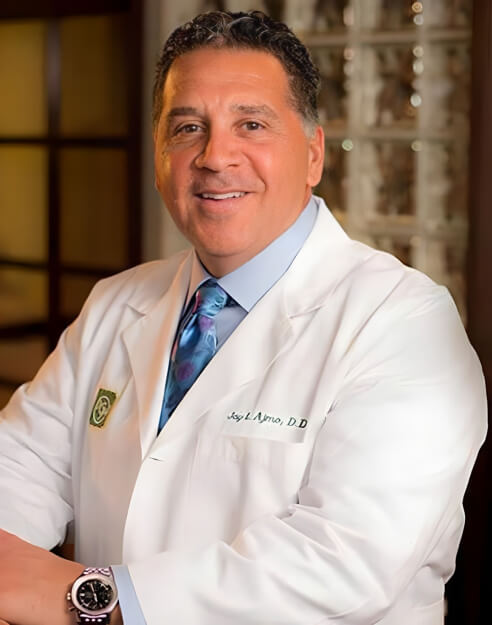
At our dental offices, Dr. Ajmo approaches every bone grafting procedure with meticulous planning and advanced techniques to ensure the best possible outcome for your dental implants.
What to Expect During Your Bone Grafting Procedure:
Healing commonly takes three months, depending on graft type and personal health factors. Early on, you may have mild swelling or soreness that prescriptions or over-the-counter meds can control. Over the following weeks and months, the graft integrates with your natural bone through osteogenesis and osseointegration, creating the stable site needed for an implant.

Good pain control and careful aftercare speed recovery. Typical advice includes:
When grafts heal properly, implants placed in grafted bone show stability and integration similar to implants in native bone — provided enough healing time is allowed. The added bone volume helps distribute chewing forces, lowering stress on the implant and reducing the risk of failure. Long-term studies suggest patients with well-integrated grafts enjoy comparable success and satisfaction to those who didn’t require grafting.
Beyond function, grafting restores the jaw’s natural shape so teeth and implants look balanced and natural. Preserving or rebuilding bone also supports neighboring teeth and prevents future bone loss. Treating both function and appearance at once gives a more complete, lasting result.

The cost of dental bone grafting can vary significantly based on the type of graft material, the complexity of the procedure, and the extent of bone loss. Minor bone grafts (e.g., socket preservation) typically range from $700 to $1,100 per site. Standard bone grafts often fall between $800 and $2,000 per site. Major bone grafts (e.g., sinus lift, large autogenous graft) can range from $2,000 to $4,500 or more.

Several factors affect cost, including the type of graft (autogenous grafts usually cost more because they involve an additional surgical site), your location, and the complexity of the case. Procedures that require extra steps — like a sinus lift — will increase the total cost.
At our dental office, our team offers financing options to spread out the cost of grafting and implants. Some insurance plans cover part of the treatment depending on your policy, and we provide flexible payment plans to fit different budgets. Bring your insurance details to your consultation with Dr. Ajmo and his team so we can review coverage and find a plan that works for you.
Before surgery, we’ll review your medical history, current medications, and any allergies. You may be asked to stop blood-thinning medications and to avoid smoking, since both can affect healing. Arrange a ride home if sedation will be used, and follow any pre-op instructions Dr. Ajmo and his team give you to help the procedure go smoothly.
Age can slow healing, but it’s not the only factor. Overall health, bone quality, and lifestyle choices (like smoking) matter just as much or more. Older patients often still do well with grafts, and adjuncts like PRP can help in cases where healing may be slower. We’ll assess your individual situation and recommend the best approach.
Oftentimes, grafting and implant placement can be done at the same time (immediate grafting). This can shorten treatment time, but it depends on how much bone is present and the type of graft. Dr. Ajmo will evaluate your bone and discuss whether simultaneous placement is a safe and effective option for you.
Ready to discover how bone grafting can transform your life and make dental implants a reality? Don’t wait another day to reclaim your smile and oral health. Contact Dr. Ajmo and the dedicated team at Teeth Next Day® today for a personalized consultation.
Schedule your expert consultation in Palm Beach Gardens at (561) 823-4056 or Vero Beach at (772) 879-5872 to explore your bone grafting and dental implant options.